How To Choose a Dryer
How do you choose a tumble dryer that fits your home and handles your usual laundry loads? Dimensions, capacity, energy consumption and maintenance requirements all matter. We explain how to read the A–G energy label, what a heat pump offers and when to consider a slim model, steam functions or a laundry tower.

Why buy a tumble dryer?
- More free space: you will not need to put up a drying rack indoors for laundry suitable for tumble drying.
- Less work with your laundry: there is no need to hang up and take down individual items. Removing laundry promptly and choosing the right programme can reduce creasing.
- Drying without waiting for good weather: you can dry your laundry even when it is raining or during winter. Check the duration of the relevant programme on your chosen model.
- Less moisture from air-drying laundry: a condenser dryer collects water in a tank or discharges it into a drain. The room still needs ventilation.
- Softer towels and fluffier laundry: with a suitable programme, laundry often feels pleasant to the touch even without fabric softener.
A few tips for choosing a dryer
- Measure the available space, allowing for the door to open, hoses and the clearances specified by the manufacturer. Check the overall depth, not just the cabinet depth.
- Choose the capacity according to your usual load size and your washing machine's capacity. The permitted load varies between programmes.
- Compare consumption in kWh per 100 cycles, the duration of the eco programme, noise levels and how easy the filters are to clean.
- When stacking a dryer on a washing machine, check the compatibility of both appliances and the stacking kit. Matching brands or dimensions alone are not enough.
- Browse the full range of tumble dryers and filter the models to suit your requirements.
Key specifications to consider when choosing a dryer
Dryer dimensions
Standard freestanding tumble dryers are usually approximately 85 cm high and around 60 cm wide. Depth varies considerably: standard models are often roughly 60–65 cm deep or more, whereas slim dryers have a shallower cabinet. The term “slim” therefore does not usually mean a smaller width.
Distinguish between cabinet depth and overall depth, including protruding parts. Allow space for hoses, opening the door and ventilation as specified in the installation instructions. Stacking on a washing machine requires a manufacturer-approved combination of appliances and a compatible stacking kit.
Dryer capacity
Capacity is stated in kilograms of dry laundry. For smaller loads, 7–8 kg is often suitable; a family will often need 8–9 kg, while large loads or bulky textiles may call for 10 kg or more. The number of people in your household is only a rough guide; the amount of laundry in each load matters more.
If you want to dry a full washing machine load in one go, choose a dryer with a matching capacity. The rated load applies to a specified programme, while programmes for synthetics, wool or delicates may have a significantly lower limit.
Drain connection options
A condenser dryer usually collects water in a tank, so you do not need to install a drain connection for it. On a model that supports direct drainage, the condensate can be discharged through a hose into a drain. Check whether the hose is included and what connection requirements the manufacturer specifies.
Do not treat condensate as pure distilled water. It may contain fibres and detergent residues. Only use it in an iron or steam cleaner if that appliance's instructions explicitly allow it; Philips, for example, advises against using tumble dryer water in its irons.
Condenser dryers and heat pumps
A heat pump dryer is also a condenser dryer. It turns moisture from laundry into water, which it collects in a tank or discharges into a drain. The difference lies in how the air is heated: older designs use an electric heating element, while a heat pump uses a refrigerant circuit and recovers some heat for further drying.
Heat pump models generally dry at a lower temperature and use less electricity than models with resistance heating. Check each appliance's specifications for the actual difference and drying time. Always follow the care symbols on your clothing.
Energy efficiency class
Since 1 July 2025 tumble dryers have used energy labels with a scale from A to G, where A indicates the highest energy efficiency. Older A++ or A+++ ratings cannot simply be converted to the new scale. Consumption is now stated as a weighted value in kWh per 100 eco programme cycles, rather than as annual consumption.
The label also shows the capacity and duration of the eco programme at full load, condensation efficiency, noise levels and a QR code linking to the EPREL database. Compare running costs using the specific consumption and capacity figures: an energy class does not correspond to a fixed number of kWh.
| Consumption shown on the label | Estimated annual consumption | Annual electricity costs |
|---|---|---|
| 80 kWh / 100 cycles | 128 kWh | CZK 768 |
| 100 kWh / 100 cycles | 160 kWh | CZK 960 |
| 120 kWh / 100 cycles | 192 kWh | CZK 1,152 |
| 150 kWh / 100 cycles | 240 kWh | CZK 1,440 |
|
These figures are illustrative and do not represent specific models or energy classes. The price of CZK 6/kWh is an assumption used for the calculation, not the current average electricity price. The figure of 160 cycles is an example of how frequently the dryer might be used. |
||
Annual costs = consumption per 100 cycles × number of cycles per year ÷ 100 × electricity price. Actual consumption depends on the programme, load, how well the laundry has been spun and ambient conditions. With a difference of 30 kWh per 100 cycles, the more efficient model saves CZK 288 a year in this example. Consider the difference in purchase prices as well.
Noise levels and condensation efficiency
Compare noise levels using the dB value and the corresponding class on the energy label, particularly if the dryer will be near living areas. Condensation efficiency indicates how much of the moisture removed from the laundry the appliance captures as water. Higher efficiency means less moisture escaping into the room, but does not eliminate the need for ventilation.
Child lock
A child lock disables the controls to prevent accidental programme changes when buttons are touched. Its scope varies by model; it may not lock the door or disable every control. Check the manual for the exact behaviour.
Useful functions and programmes
Focus on functions you will actually use. Trade names vary between manufacturers and do not, on their own, tell you what features a particular model has.
Drum lighting
Internal lighting makes it easier to unload laundry and find small items such as socks. If you want this feature, check that your chosen dryer includes it; it is not standard on every model.
Cleaning the filters and positioning the dryer
Before buying, check how easily the filters can be removed and what care the condenser requires. The lint filter should generally be cleaned after every cycle, with other parts cleaned according to the manual. Blockages restrict airflow and can increase drying times and energy consumption.
Install the dryer on a level, stable floor in a space with the specified clearances and a suitable ambient temperature. An unheated garage or an enclosed cupboard may not meet the manufacturer's operating requirements.
Use the “Compare” function for selected products on Alza.cz. Alongside price, compare overall dimensions, capacity, consumption per 100 cycles, noise levels and the duration of the eco programme. Also check which accessories are included.
Types of tumble dryers
Dryers can be categorised by their operating principle, dimensions or features. A single dryer may therefore be a condenser, energy-efficient, smart and steam model at the same time.

When choosing a standard dryer, focus on its actual overall depth and the space required for installation. The category name is no substitute for the dimensional drawing of the specific model. A larger drum is useful when regularly drying bigger loads, towels or bed linen.

A slim dryer is useful where every centimetre of depth matters. Manufacturers and retailers may use this description for appliances of different depths, so always use the overall dimensions, including the door and other protruding parts. When stacking with a slim washing machine, check the approved combination and stacking kit.

Choose a built-in dryer according to its installation drawing, capacity and ventilation requirements. A built-in design does not necessarily mean a shallower depth. You cannot assume that a standard freestanding model can be enclosed behind a furniture door or have its top panel removed.
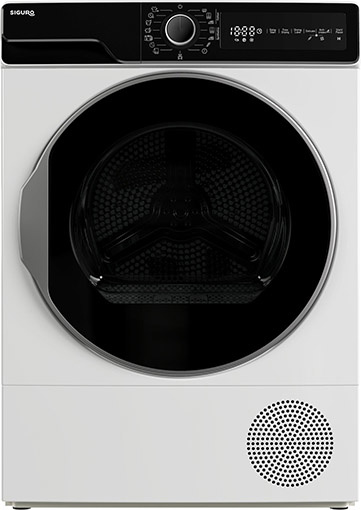
Condenser dryers do not need to vent moist air outside the building. However, condensation does not, by itself, indicate energy consumption: distinguish between heat pump models and older designs with an electric heating element.
Since July 2025, stricter energy efficiency requirements have applied in the EU to tumble dryers newly placed on the market. Older units placed on the market before that date may still be sold from existing stock. When choosing a dryer, compare the technology and specifications of the particular model.

A heat pump extracts heat from the moist air and uses it to reheat the drying air. When comparing models, check energy consumption, cycle duration and the heat exchanger cleaning instructions. The lower temperature may suit more delicate textiles, but their care labels and the recommended programme must always be followed.
“Energy-efficient” does not describe a separate drying principle. When choosing a model, check the new A–G energy label and its specific consumption. Whether a higher purchase price pays for itself depends on the difference in consumption, the electricity price and the number of cycles per year. The most efficient class is therefore not automatically the cheapest option for occasional use.

Smart dryers may offer cycle monitoring, additional programmes, diagnostics or connectivity with a compatible washing machine. They use apps such as LG ThinQ or Home Connect. Check the options available on your chosen model.
Remote start usually needs to be enabled on the appliance first, with the door closed. Wi-Fi, Bluetooth or NFC connectivity alone does not guarantee identical features or the ability to control the dryer from outside your home.

Steam does not dry the laundry. A steam dryer dries using a flow of heated air and uses steam or gentle moistening for additional fabric care. Such a programme can relax creases and refresh suitable textiles. Results depend on the fabric and load size; there is no general guarantee that ironing will no longer be needed.

A set consists of a separate washing machine and tumble dryer. Before buying, check whether the price includes a stacking kit and whether the selected pair can be stacked. Smart models may be able to share wash information with the dryer, but this is not a standard feature of every set.

A laundry tower, such as the LG WashTower, combines a washing machine and dryer in a single structural unit. Unlike a combination washer-dryer, it has two drums, allowing you to wash in one and dry in the other at the same time. Laundry must be transferred between the drums manually.
Before buying, check the overall height, width and depth, installation access and the requirements for water, drainage and electrical connections. Washing and drying capacities may differ. Check the shared controls and the tower's design on the specific product.

A combination washer-dryer can dry laundry straight after washing without transferring it. For an uninterrupted cycle, however, you must stay within the drying capacity, which is usually lower than the washing capacity. You cannot wash another load while drying the previous one. Compare electricity and water consumption for the complete wash-and-dry cycle; these figures are not directly comparable with the label of a standalone dryer.

Choose a stacking kit according to the list of compatible appliances and the manufacturer's installation requirements. There is no universal rule that a washing machine at least 55 cm deep is sufficient. Where stacking is permitted, the dryer goes on top and the washing machine underneath. Check the stacking kit's manual for the load limit of any pull-out shelf.
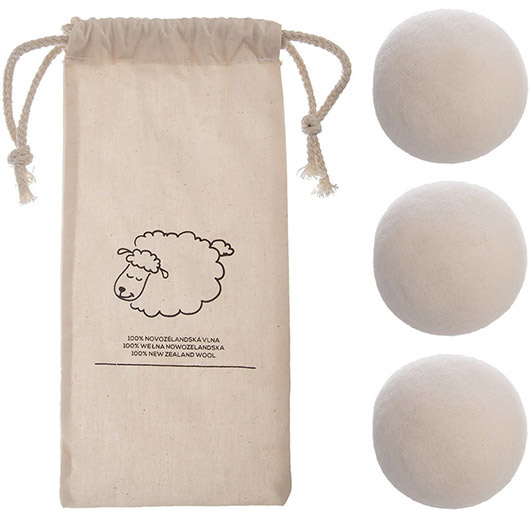
A drying rack keeps suitable items from tumbling during drying; its use must be permitted by both the dryer manufacturer and the care label of the textile or footwear. A drainage kit connects the condensate outlet to a drain. Dryer balls may help separate laundry, but do not guarantee a specific energy saving. Only use fragrance accessories in accordance with the appliance manual.
Dryers by brand
Browse dryers by brand. Alongside features, compare the availability of servicing and spare parts, as well as the terms of any extended warranty.








How to choose a tumble dryer: frequently asked questions
Do my washing machine and dryer need to be from the same manufacturer?
If installed separately, the washing machine and dryer do not need to be the same brand. If you want to stack them, check that the particular combination of appliances and stacking kit is explicitly approved. The same brand alone does not guarantee compatibility. When drying clothing, follow the care symbols on its label.
Can I stack a dryer on a washing machine?
Yes, if the manufacturers of the specific appliances permit it and you use the correct stacking kit. Check the dimensions, load capacity and securing method. The dryer goes above the washing machine; a universal minimum washing machine depth is not enough to establish compatibility.
Can I use fabric softener if I tumble dry my laundry?
Fabric softener is often unnecessary because drying and drum movement fluff up the laundry. Its use depends on the dryer manual, the product manufacturer's recommendations and the textile's care label. Some manufacturers advise against it. However, it is not correct to claim that every use of fabric softener will destroy the dryer.
What dryer capacity should I choose?
Base your choice on your usual load size and your washing machine's capacity. For smaller loads, 7–8 kg is often sufficient; for a family, 8–9 kg; and for large loads, 10 kg or more. These are only rough guidelines. Capacity is measured by the weight of dry laundry and is often lower for delicate or specialist programmes.
Which dryer energy class offers the best value?
On the A–G scale, A means the highest energy efficiency. However, the most economical model also depends on its purchase price and how often you dry laundry. Compare the specific consumption per 100 cycles and calculate how long any extra purchase cost would take to pay back.
Does a dryer need a drain connection?
A model with a condensate tank can operate without a drain connection; the tank needs to be emptied regularly. Direct drainage is a convenient option on dryers that support it. Check the manual for the accessories and connections required.
Do a dryer's dimensions affect its performance?
Dimensions may limit the available capacity and design options, but do not by themselves determine energy consumption or drying quality. A slim model usually means less depth, not less width. Always compare the specifications of the particular appliance.
What should allergy sufferers check when choosing a dryer?
Drying in an enclosed drum limits the laundry's contact with the outdoor environment, for example when pollen levels are high. However, a standard drying programme cannot automatically be considered a disinfection process or a guarantee of allergen removal. If choosing a hygiene programme, check the manufacturer's evidence of its effectiveness and the conditions for its use.
Will a dryer remove pet hair and fabric bobbles?
The filter collects loose fibres and may also capture some pet hair. Results depend on the material and the amount of hair; complete removal cannot be promised. A dryer will not reliably remove firmly attached fabric bobbles; a fabric shaver is designed for that purpose.
How does a tumble dryer work?
Laundry tumbles in a rotating drum as heated air passes through it and removes moisture. A condenser dryer then captures that moisture as water. A vented design discharges moist air through a duct outside the building. A heat pump also allows some of the heat to be reused.
What is the difference between a condenser dryer and a heat pump dryer?
A heat pump dryer is a type of condenser dryer. The meaningful comparison is between a condenser model with a heat pump and one with an electric heating element. A heat pump usually means lower consumption and a lower drying temperature, but check the specifications of the particular product.
Is a laundry tower the same as a washer-dryer?
No. A laundry tower has separate washing and drying drums arranged one above the other. A combination washer-dryer washes and dries in the same drum. With a tower, you need to transfer the laundry, but you can process two loads at the same time.
Tumble dryer glossary
Sensor drying
Sensors monitor the moisture in the laundry, and the electronics adjust the drying time accordingly. Manufacturers use different names and designs, such as 6th Sense. Check the available dryness settings and the description of how the particular model works.
Inverter motor
An electronically controlled motor adjusts its speed according to the appliance's needs. The term alone does not guarantee a particular noise level or the lifespan of the entire dryer. Any extended warranty on the motor or compressor may have specific conditions and usually does not cover the whole appliance.
Dryer steam function
An additional programme uses steam or moistening to reduce creasing and refresh suitable laundry. The main drying process uses airflow. The manual specifies the permitted materials and load size.
Glossary