
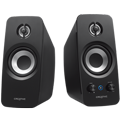

Subwoofer - stylish wireless HiFi with clear and deep sound, two high-quality speakers, from 25Hz, 2x Class-D amplifiers, connectivity via WiFi or Ethernet
The company Sonos is a leading developer of luxury electronics. Their headquarters are located in Santa Barbara, California, also known as Silicon Valley, which is considered the most important technological centre of the world. Here, ordinary speakers have been transformed into a design piece with the most innovative sound technology.
Sonos' SUB belong to the category of compact Wireless Subwoofers. Two high-quality speakers are pitched against each other, which allows for significantly profound speech. Here is where you'll really notice the difference with some off-brands device, such as the rattle that often occurs. Surely you'll appreciate the two class-D amplifiers, which noticeably encourage the musical expression of other smart Sonos speakers, which can be linked using wireless networks.
Specifications:
Connection options: Connect the network cable to your Internet router Wirelessly via signal transducers Sonos BRIDGE
Active speakers have a custom built-in amplifier (typically a PC speakers). Conversely, passive systems require an external amplifier, from which the sound goes to each speaker.
The number of channels refers to the number of independent audio signals that can be reproduced simultaneously. An example might be 2-channel stereo sound, where each channel represents one ear (left and right), or 5.1 channel surround sound, which has five full channels (front left, center, front right, rear left, rear right) and one channel for the subwoofer.
Subwoofers are speakers designed to reproduce low frequencies, usually referred to as bass. There are two basic types of subwoofers: active and passive. Active subwoofers have their own amplifier integrated directly into the unit, while passive subwoofers require an external amplifier for power. Active subwoofers are often considered more user-friendly because they do not require additional equipment to function, while passive subwoofers can provide a higher level of control over the sound.
Active speakers have a custom built-in amplifier (typically a PC speakers). Conversely, passive systems require an external amplifier, from which the sound goes to each speaker.
The number of channels refers to the number of independent audio signals that can be reproduced simultaneously. An example might be 2-channel stereo sound, where each channel represents one ear (left and right), or 5.1 channel surround sound, which has five full channels (front left, center, front right, rear left, rear right) and one channel for the subwoofer.
Subwoofers are speakers designed to reproduce low frequencies, usually referred to as bass. There are two basic types of subwoofers: active and passive. Active subwoofers have their own amplifier integrated directly into the unit, while passive subwoofers require an external amplifier for power. Active subwoofers are often considered more user-friendly because they do not require additional equipment to function, while passive subwoofers can provide a higher level of control over the sound.
Chcete doručiť tovar na Slovensko? Prezrite si Sonos SUB
Für Versand nach Österreich, besuchen Sie bitte Sonos SUB
Magyarországra történő kiszállításért tekintse meg ezt a termékoldalt: Sonos SUB Mélynyomó
Try our cookiesAlza.cz a. s., Company identification number 27082440, use cookies and other data to ensure the proper functioning of the website and, with your consent, also, among other things, to personalize advertising and the content of our websites. By clicking on the “I understand“ button, you agree to the use of cookies and the transfer of data regarding the behavior on the website for displaying targeted advertising on social networks and advertising networks on other websites.
We use 8 categories of cookies on our website:
Technical cookies
These are strictly necessary for the functioning of the website and the features you choose to use. Without them, our website would not work; you wouldn't be able to log in to your user account, for example.
Functionality cookies
These cookies allow us to remember your basic choices and improve the user experience. These include remembering your preferred language or allowing you to stay logged in permanently.
Social media cookies
These cookies allow us to easily link you to your social media profile and, for example, allow you to share products and services with your friends and family.
Content personalisation
These cookies allow us to show you content and ads according to the information we have about you to best meet your needs. This includes what content you have viewed, or on what device you are accessing our website.
Non-personalised advertising
These cookies allow us to show you general ads for products and services.
Personalised advertising
Thanks to these cookies, we and our partners can offer you relevant products and services based on your purchases, your shopping behaviour and your preferences.
Audience metrics
These cookies allow us to optimise our site for your convenience based on how you use it. The aim is to remember or anticipate your choices. This includes, for example, the use of features, their location, or the behaviour on the page.
By giving your consent to the processing of cookies, functionality and analytical cookies will be installed on the device you use to browse the website (click on the "I understand" button for both categories, or you can select only one of the categories by clicking on the "Settings" button). We always install technical cookies on your device, even without your explicit consent, because without them our website would simply not work.
You can revoke your consent to the processing of cookies. In connection with our company's cookie processing, you also have the following rights: the right to access cookies, delete, modify, supplement and correct them, restrict processing and the right to lodge a complaint with the Office for Personal Data Protection. Read more about your rights.