


Pistol foam 750ml CS

Don't like the alternatives? Choose from the full product list
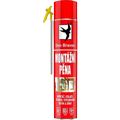

Pistol foam 750ml CS
Get a great result of your hard work with pistol foam. With this 1-component insulating foam, you can rely on its high adhesion to materials such as concrete, masonry, wood, stone or polystyrene or plastics. The gun foam can also insulate sound and heat well. It has a good filling ability and its dimensional structure is very high quality. It is a suitable choice for professionals as well as do-it-yourselfers. It does not contain CFCs and you can playfully embark on it, for example, sealing wooden cladding, filling cavities or insulating roof structures between partitions. The created joint is then resistant to UV radiation.
Key features of CS pistol foam, 750 ml
- One-component ČS insulating foam insulates sound and heat well
- Pistol foam with high adhesion to various materials
- Very good filling ability
- The dimensional structure of the foam is high quality
- The joint is also resistant to UV radiation
- Free of CFCs
Volume:
750 ml
Base:
polyurethane
Consistency:
paste in an aerosol spray
Colour:
yellow
Workflow:
We recommend moistening the substrate with spray water before applying the foam. We recommend covering the surrounding areas at risk of pollution. Shake the can well. Screw on the application gun. When applying, hold the can upside down. We fill the joints from the bottom up in the amount of 1/2 to 1/3 of the joint volume. Holes over 40 mm wide are filled in layers of min. more than twice, always after the previous layer has hardened. We do not overfill the joint, the foam will increase its volume by about 60%. Excess material can be cut off with a knife after hardening.
Warning:
Only transport cans in a vertical position with the lid facing up, otherwise the valve may become clogged and the product may be damaged. Carefully read the safety information on the product packaging or in the documentation provided below. The product is extremely flammable. The foam is not suitable for substrates made of polyethylene, polypropylene, Teflon, silicone. Cured foam is not UV resistant. It is necessary to cover the filled mass within 14 days to 3 months, depending on the solar exposure. We do not recommend heating foam or joints at low temperatures. Do not apply on frosted substrates. Before use, we recommend testing the product on a selected surface.
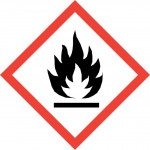
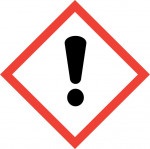
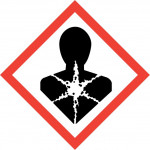
Upozornění:
H222 Extrémně hořlavý aerosol. H229 Nádoba je pod tlakem: při zahřívání se může roztrhnout. H315 Dráždí kůži. H317 Může vyvolat alergickou kožní reakci. H319 Způsobuje vážné podráždění očí. H332 Zdraví škodlivý při vdechování. H334 Při vdechování může vyvolat příznaky alergie nebo astmatu nebo dýchací potíže. H335 Může způsobit podráždění dýchacích cest. H351 Podezření na vyvolání rakoviny. H362 Může poškodit kojence prostřednictvím mateřského mléka. H373 Může způsobit poškození orgánů při prodloužené nebo opakované expozici. H413 Může vyvolat dlouhodobé škodlivé účinky pro vodní organismy.
Specifications
Features
Application type
Specifications can be changed without notice. Images are for illustrative purposes only.