


www.no-shoes.cz
E-book, Czech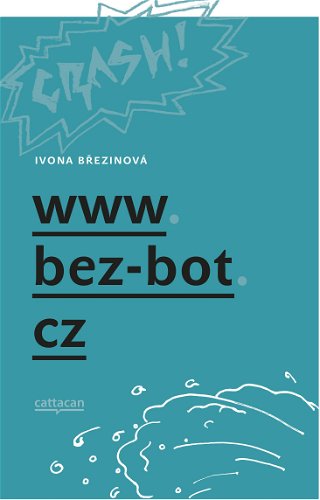

www.no-shoes.cz
Is it a book about human misery, hopelessness and inner uncertainty? Or about happiness, hope and self-discovery? It is definitely about a struggle. But happiness, hope and self-discovery ultimately win out, that much is certain. However, it's not a fairy-tale victory.
The story begins like a terrifying, dreamlike drama with the hazy awakening of a seriously injured young skier, Ben Braun. The world is suddenly alien to him, reality is almost impossible to grasp, and he perceives everything in fragmented hints.
But waking up is even worse, as Ben has to come to terms with the fact that he has lost both his legs. Is this the end of his life? What's next? These are questions that not only need to be sought, but their concrete, life-affirming answers have to be painstakingly created. No, it's not easy. Even though he is helped by the friendly hospital staff, his parents, his sister Vendy, and his friends from the ski club – the awkward Oskar and the charmingly venomous Mikina. After all, it's not easy for them either – they don't know how to act. How should they look at Oskar? What should they talk about? And which words must they not say in front of him? Are verbs like 'go', 'walk' and their variations taboo?
What's more, Ben begins to suspect that not everything has been said. That there is something behind his tragic accident that neither his friends nor the staff want to talk about. Does it have something to do with Danka? The girl Ben had a crush on? It's an almost detective-like mystery…
In the end, however, Ben decides to fight. A great boost for him is his fellow patient Emil, who has been in an even worse state for years but hasn't given up. This friendship helps him; in fact, it helps them both. And the two boys are able to treat their pain with humour – sometimes infantile, sometimes cynically harsh, but always healing.
Initially, all of this alternates with painful treatment, then demanding and equally painful rehabilitation. Ben learns to stand on his first prosthetic legs. But he longs to play sports again, supported by his ski coach. And so, between wheelchair races with Emil down the hospital corridors and practising walking on his 'first legs', Ben dreams of perfect but expensive prostheses that would allow him to return to sports and a normal life.
And yes, in the end, everything turns out well. Ben unravels the mysteries of the past, learns to walk, gets into grammar school, gets his perfect prostheses and plays sports again. He has won his battle. And he has found new friends and perhaps even love. But... it's no fairy tale.
The book is primarily aimed at teenagers. It is written in a laconic, fresh style, and although it deals with very serious issues (existential, moral, relational and, of course, health-related), it is written without any moralising and without unnecessary big words. It's sober and punchy. And above all, it's witty and linguistically original. It therefore draws adults into the story very easily, because Ben's story concerns them too – it's timeless.
A very valuable aspect is the fact that the author subtly and naturally presents a kind of basic, condensed 'manual' on the issue of physical disability within the text. A manual for both the disabled and those around them.
The book has received several awards:
Teachers' Award for Contribution to Reading Literacy (SUK 2018); Children's Award – 20 Most Popular Books (SUK 2018); nomination for the Golden Ribbon 2018; Czech Literary Centre - representative selection catalogue for foreign countries New Czech Books (Spring 2019)
About the author:
Ivona Březinová wanted to write before she could even read. Today, writing is both her hobby and her full-time job. She writes mainly for children and young people. Picture books, fairy tales, books about animals, children's encyclopaedias, adventure stories, and biographies. She likes historical themes as well as sci-fi. She says that some books hurt. Because when she writes them, she experiences everything along with her characters.
Ben Braun, the hero of the book www.bez-bot.cz, is one of those who touched the author's life while she was writing. But so did the ten-year-old wheelchair user Julin from the book A Boy and a Dog, Kryšpín, whose serious sensory impairment confronts him with bullying in the book The Escape of Kryšpín N. , or fifteen-
Samples to download:

EUROMEDIA GROUP a.s., Nádražní 762/32, Praha 5-Smíchov 15000, Česká republika, www.euromedia.cz