


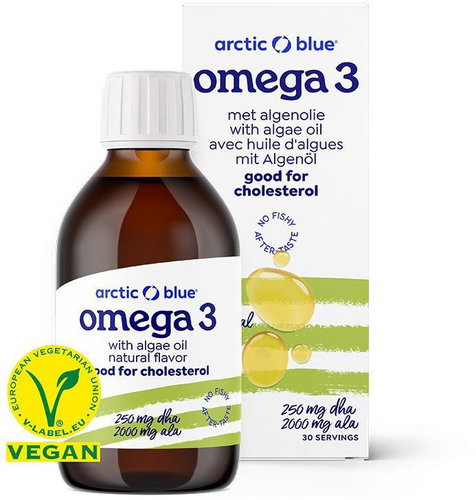
Arctic Blue Vegan Omega 3 Algae 150 ml (250 mg DHA & 2000 mg ALA)

- Help and manuals
- Ingredient
- Specifications
- Photos & Videos 2
- Alternatives 8
- Accessories and suggested products

Arctic Blue Vegan Omega 3 Algae 150 ml (250 mg DHA & 2000 mg ALA)
Arctic Blue Vegan Omega-3 Algae Oil
150ml
Freshly pressed, unrefined linseed oil contains a high amount of omega-3 ALA. The human body converts ALA into omega-3 EPA and DHA as needed. This makes linseed oil an excellent supplement to algae oil. The linseed oil provides a typical spicy flavour and a naturally darker colour, which is not a defect but rather proof of the presence of bioactive substances.

Algae – The Food of the Future
Algae are being used more and more and will certainly be the food of the future. They are miniature plants that produce their own omega-3 fatty acids, even on land in a closed and controlled environment. In nature, algae transfer their omega-3 to the fish that consume them. Algae oil is therefore just as potent and high-quality as fish oil. Arctic Blue produces its oil from cultivated algae in a controlled environment, ensuring that the oil contains no contamination from the ocean. Arctic Blue Algae Oil is 100% vegan; no fish oil was used in its production. The capsules are also vegan, with the gelatine replaced by seaweed. Of course, it is grown without pesticides, so the oil could be certified as organic, but unfortunately, there is no legislation for this yet. It is only a matter of time.
Arctic Blue Vegan Omega-3 Algae Oil
- Freshly pressed linseed oil + pure algae oil
- Pure oil from Schizochytrium sp. algae grown in a controlled, ecological environment
- 2000mg ALA (linseed oil) = a source of DHA and EPA
- 250mg DHA (algae oil)
- Completely free of aftertaste and odour (due to very low oxidation)
- 100% vegan (linseed oil + algae oil)
- The same omega-3 as in fish oil (algae are the source of omega-3 for fish)
- Omega-3 = building blocks, oxidative stress, mental and physical condition, regeneration
A Plant-Based Alternative to Fish Oil
Algae are single-celled plants found in rivers and oceans. There are many species, but only one produces the right omega-3s in large quantities. This is the Schizochytrium species, from which we extract our algae oil. Just as probiotic cultures or brewer's yeast do their work in large vats, algae are grown in a controlled manner to a high density. The oil is then extracted from them. Early attempts to grow algae on land only produced algae DHA oil. However, algae can be naturally guided to a point where they produce EPA oil or an EPA/DHA oil. This makes algae oil a perfect alternative to fish oil. When choosing an algae oil, you should pay attention to the following characteristics: official vegan designation/certification, the amount of EPA/DHA, and the absence of any unpleasant aftertaste or odour. These basic points can be used to distinguish quality and freshness. At Arctic Blue, we 100% guarantee this, and we also regularly measure the freshness of our algae oil in the laboratory. As with fish oil, the so-called Totox value = total oxidation value is also measured for algae oil.
What is the Ideal Ratio Between DHA and EPA?
DHA (docosahexaenoic acid) and EPA (eicosapentaenoic acid) are very similar. The only difference is that DHA has 22 carbon atoms in its chain, while EPA has 20. DHA has properties related to tissue structure, while EPA is related to oxidative stress. However, the body is very clever – it converts DHA into EPA as needed (it just needs to remove two carbon atoms). With a sufficient intake of DHA, the body regulates the ratio between DHA and EPA itself. This is particularly important for the brain, heart, and nervous system.
Nutritional Values and Ingredients
| Nutritional Component | Content in 5ml |
|---|---|
| Marine algae oil | 470mg |
| Omega-3 DHA | 250mg |
| Linseed oil | 4084mg |
| Omega-3 ALA | 2000mg |
Linseed Oil, Marine Algae Oil (Schizochytrium sp.), Sunflower Oil, Rosemary Extract, Antioxidant (Tocopherol, Ascorbyl Palmitate).
Recommended Dosage
5ml 1–2× a day (1–2 measuring spoons). Take during or after a meal. The package contains 30 servings.
Warning
Once opened, store in the refrigerator and use within 4 months. Not a substitute for a varied diet. Do not exceed the recommended dose.
Storage
Store in a cool, dry place, out of the reach of children.
Specifications
Product characteristics
Omega fatty acids
Contained substances
Effect
Usage
Form
Packaging
Storage temperature
Accessory type

ForActiv.cz s.r.o., Plotní 75, 620 00 Brno CZ, [email protected]
Specifications can be changed without notice. Images are for illustrative purposes only.