


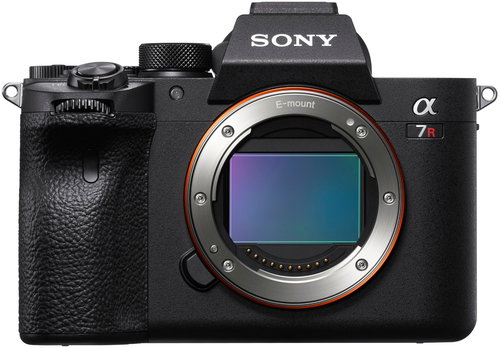
Sony Alpha A7R IV A body
 Installment calculator
4,9%
interest
from 1,610,- monthly
Installment calculator
4,9%
interest
from 1,610,- monthly
- Help and manuals
- Specifications
- Photos & Videos 14
- Alternatives 8
- Accessories and suggested products

Sony Alpha A7R IV A body

Sony Alpha A7R IV A body mirrorless camera
Even more inspiring
Enter a whole new world of photographic expression with unparalleled image quality and processing speed. The new powerful features of the α7R series enable even more advanced connectivity and improved reliability required by professionals. Remarkable high resolution CMOS sensor maximised by the image processor and minimal vibration thanks to the five-axis image stabiliser. Great AF coverage, speed and tracking capability. The real-time automatic eye focus function now also tracks the eyes of animals. By capturing a series of images at up to 10 fps, the camera can capture up to 10 fps. /s captures the decisive moments. Professional features hidden in a rugged compact body delivering confidence, flexibility and freedom.

Full-frame
Sensor size
61 Mpix
Sensor resolution
Sony E
Bayonet
IBIS
Image stabilisation
SD / SDHC / SDXC
Memory card
Sony Alpha A7R IV A Digital Camera Key Features
- Maximum achievable resolution 61 MP with full-frame CMOS sensor
- Improved image processor allows you to get the most out of the CMOS sensor
- 14-bit RAW output for natural gradations
- 5.76 million-dot UXGA OLED Tru-Finder
- Development of wide-angle, fast and stable autofocus
- Up to 68 images in continuous shooting mode
- Exceptionally fast 10-second burst shooting /s with AF/AE tracking
- Enhanced real-time automatic eye focus function (human eye)
- Real-time automatic eye focus reliably tracks wild and domestic animals
- Real-time tracking continuously focuses on tracked objects
- Wireless computer control function
- Reliable durability and weather resistance in demanding conditions
- Create realistic 4K high-definition videos
- Sophisticated digital audio recording via the new MI socket

Full-frame sensor and maximum resolution
Sony's newly developed 35mm full-frame back-illuminated CMOS sensor with 61.0 MP resolution gives the α7R IV full-frame mirrorless camera extraordinary capabilities only expected in a conventional medium format camera. Thanks to the mirrorless design and the absence of shake caused by the mechanical mirror, it is possible to maximize resolution without negatively affecting image quality. The α7R IV produces image quality that exceeds the expectations of conventional full-frame cameras, especially those in the low and medium sensitivity ranges. Sony's patented technology achieves superb high resolution while ensuring low noise and high sensitivity. The excellence of the new image sensor is complemented by the high-speed enhanced BIONZ X image processor. This allowed for faithful reproduction of detail and significant noise suppression. Noise that might appear due to increased pixel count is minimized in high quality images, especially in the standard ISO sensitivity range up to ISO 32000. A dynamic range of up to approximately 15 steps at low ISO (for photos) provides smoother reproduction of gradation from shadows to highlights. The colour reproduction of photos taken with the α7R IV, which has proven itself in the latest α series, allows you to capture the colour of skin in a portrait and the vivid colours of flowers, achieving a natural rendering.

Stabilization, high resolution and RAW output
The extreme performance of the α7R IV's high 61-megapixel resolution is maximised by other benefits of the α7R IV, such as the built-in five-axis optical image stabiliser with an optimised algorithm to achieve the benefits of up to a 5.5-stop shutter speed. Another amazing feature is the silent, vibration-free electronic shutter. In addition, the α7R IV features an internal structure of shock-absorbing material that absorbs the effects of shutter movement to minimize shutter shake. Many of the α7R IV's features are designed to ensure sharp and clear images. The α7R IV supports both compressed and uncompressed 14-bit RAW output for smoother, more natural gradation that contributes to higher overall image quality. Advantages such as even higher 16-bit image processing, advanced LSI technology and an enhanced BIONZ X image processor enable 14-bit RAW output even when shooting in silent or continuous shooting mode.

Viewfinder and autofocus performance
Electronic viewfinder with a resolution of 5.76 million dots, which is the new boast of the α7R IV, provides high precision, High brightness and high-contrast visibility for faithful reproduction of details with 1.6 times higher resolution than the α7R III. The "high quality imaging" mode suppresses moiré and jagged edges and the 120/100 sn. /s shows smoother movement. The fluorine layer makes it easier to remove dirt or fingerprints from the lens. With greater coverage and density of autofocus points and an improved algorithm, the overall autofocus performance has evolved to provide stable and accurate object tracking. Fast Hybrid Auto Focus combines high-speed phase detection and high-precision focusing with contrast detection. 567 AF points with phase detection and 425 AF points with contrast detection offer wide coverage. The system provides fast response even in low light and with large volume data.

Continuous shooting, memory, image stability and flash operation
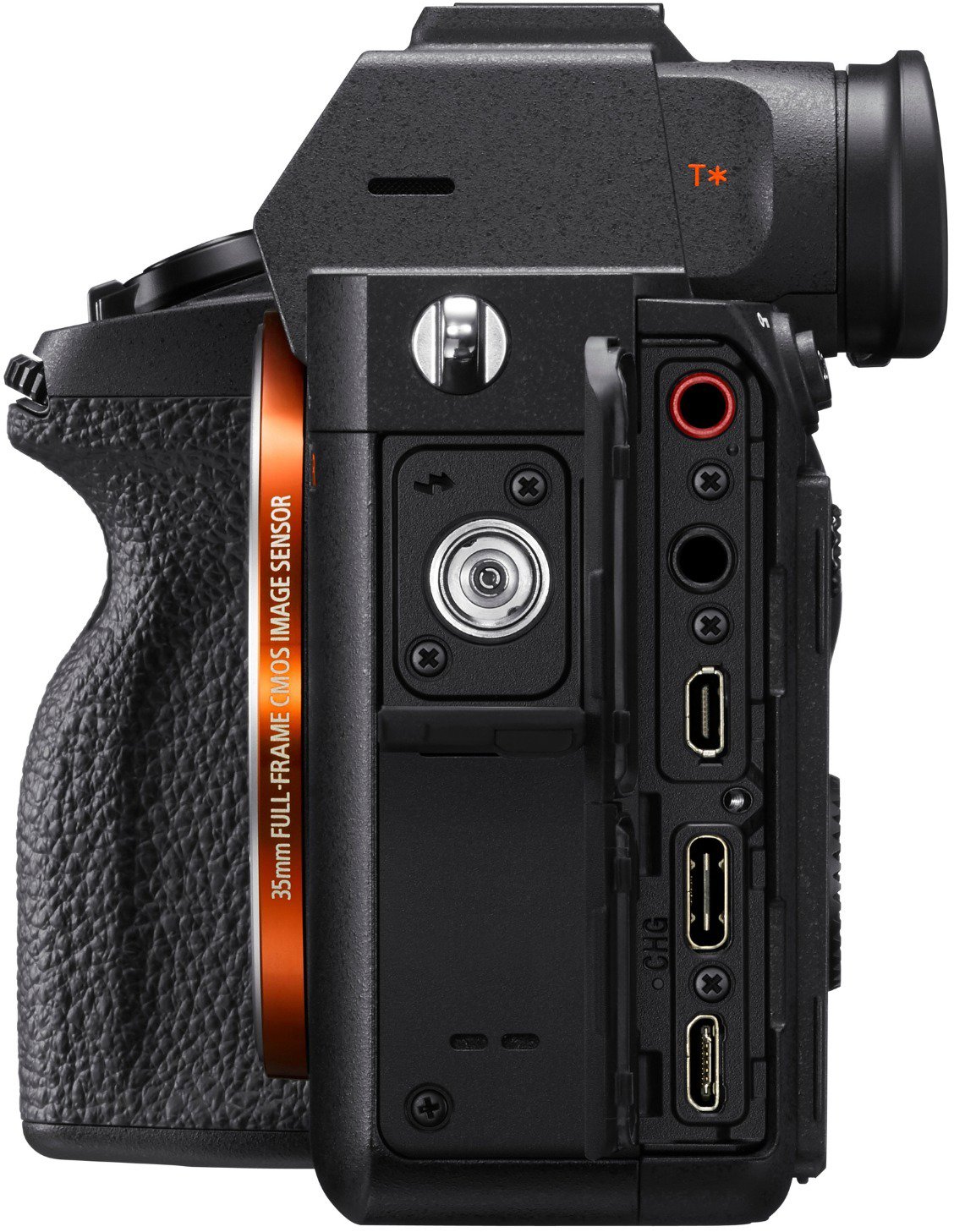
Despite the high resolution of 61 MP, a sophisticated algorithm enables efficient processing of continuous shooting at up to 10 sn. /s with AF/AE tracking. It is also possible to shoot 8 sn. /s in live preview mode. Cropping to APS-C still produces a 26.2 MP image. The buffer can hold up to approximately 68 images. When writing, you can use the menu, check playback and watch the countdown. The Flicker Reduction function automatically adjusts exposure when shooting under fluorescent or other flashing light. The camera has two slots for UHS-II SD cards and allows for different storage modes. It uses a high-capacity NP-FZ100 battery and allows connection of external mobile batteries via USB. Vertical grip support and a battery adapter are also available. The sync connector allows compatibility with external flashes and supports advanced sync modes.

Advanced AF functions, animal handling, tracking and control
Enhanced real-time automatic eye focus works in conjunction with real-time tracking technology. The system recognizes and processes facial and eye data with high accuracy and allows the selection of a specific eye. The function is also available when taking pictures. Automatic eye focusing also supports animals with a new AI algorithm that tracks the eyes of wild and domestic animals. Real-time tracking is automatically maintained throughout the entire half-press of the shutter button and can track colour, texture and distance. Phase detection AF in the focal plane is also supported for A mount lenses via an adapter. The camera offers wireless computer control via Wi-Fi, as well as USB control via USB Type-C. Synchronisation options allow external flashes to be connected. Pixel Shift Multi Shooting now supports compositing 16 images into one highly detailed image with approximately 240.8 million pixels.

Durability, ergonomics, controls, video features and connectivity
The α7R IV has improved magnesium alloy body durability with better sealing of the housing, battery and terminals. The controls have been redesigned: Multi-position dial, larger AF-ON button, new exposure correction dial lock and improved texture for more confident operation. Touch control enables Touch Focus, Touch Tracking and faster display response. 4K video benefits from Super 35mm mode, which densifies 2.4x more data and supports HLG, S-Log3 and XAVC S up to 100 Mbps. Faster Hybrid AF provides smoother focusing when shooting movies and allows you to use Touch Tracking. The digital audio interface in the MI socket supports clear sound with the ECM-B1M microphone or XLR adapters. Advanced video features are supported including HDMI clean output, TC/UB, Zebra, S&Q and proxy recording. The camera supports 4:3 and 1:1 aspect ratio, allows saving settings to card, importing and exporting settings, custom My Dial interface, My Menu, and quick sorting of images using rating and Image Jump Setting. FTP transfer supports background work with FTPS security, nine servers can be stored. The camera works with the Imaging Edge Mobile app, allows file transfer even after shutdown, and supports control of external flashes directly from the camera.
Photos taken with the Sony Alpha A7R IV A digital camera




Sony Alpha A7R IV A Digital Camera Review
I still own the previous generation (Sony A7 III) which was great. But Sony has improved almost everything - the resolution has jumped to 33MB, the viewfinder has been improved (it's bigger and brilliantly bright) and the display is fully rotatable. Focusing is faster and more accurate, as is tracking people or objects that are moving. I have to say it is addictive and after a few days I was unable to understand how I could shoot without it: ). The menu has also undergone significant improvements, which is clearer and more intuitive (which is not usual for Sony). I use Sony G, Sigma and Tamron lenses and they all work without the slightest problem. In summary, the investment is definitely worth it, the improvements are not just cosmetic, but the camera has jumped several levels in usability. Read the full review here.
Specifications
Colour
Type and function
Sensor
Video
View-finder
Focusing
Display
Dimensions and weight
Memory and storage
Battery
Colour
Inputs and outputs
Package contents

Sony Corporation is a Japanese company founded in 1946. Its headquarters is located in Tokyo. Its beginnings were humble. The first product sold under the Sony brand was a transistor radio. It was those radios that played a pivotal role in the company's expansion in the 1960s and the world quickly began to associate Sony products with a reliably stellar price-performance ratio.
In the 1970s, Sony was severely affected by the global economic crisis. Many analysts considered the company effectively defunct and could see no future for it. However, they underestimated the famous Japanese perseverance and courage. The crisis was not a disaster for Sony; on the contrary, it served as a launching pad to even greater heights. The company recovered and soon changed the media landscape with the development of the CD and later the DVD. In the early 1990s, Sony achieved another major success with the introduction of the PlayStation gaming console. It is the gaming consoles that best represent the intersection of the three key areas in which the company operates today – electronics, video games, and the entertainment industry.
Specifications can be changed without notice. Images are for illustrative purposes only.