


EMOS GoSmart IP-6100G HAWK with 4G LTE and a solar panel
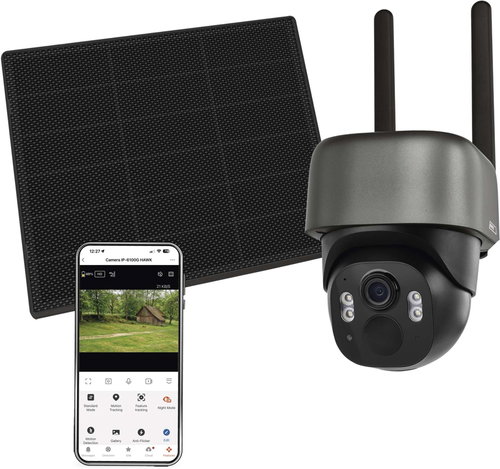


IP Camera - outdoor, solar-powered, maximum video resolution 2560 × 1440 px, classic night vision with a maximum IR range of 10 m, motoric rotation, fixed lens, detection of motion, audio, person(s) and animal recognition, built-in microphone, built-in speaker, audio recording and bidirectional audio, mobile app notifications, audio alarm, SD and cloud storage, Wi-Fi interface, connection over 4G, powered by solar energy or batteries, control via tuya, smartlife and EMOS GoSmart, IP44 IP rating, solar panel and assembly material included, dimensions 15 × 9.8 × 14 cm (H×W×D)
Show full description
New arrival
2,649,-
Warranty 24 months
Code:
EMOS26170
- Help and manuals
- Specifications
- Photos & Videos 10
- Alternatives 8
- Accessories and suggested products

EMOS GoSmart IP-6100G HAWK with 4G LTE and a solar panel
2,649,-
In stock > 5 pcs at the supplier's
Buy
EMOS GoSmart IP-6100G HAWK with 4G LTE and a solar panel
Specifications
Connection
IP camera protocol
Supported OS
Compatible app
Compatible voice assistants
Connection
Connection
IP camera protocol
IP camera protocol
Connectivity
Supported OS
Compatible app
Compatible voice assistants
Power supply
Application language
Features
Use
Rotation
Rotation direction
Other functions
Detection
Audio
Notifications
Alarm
Mounting option
Video
Display resolution
Horizontal viewing angle
Digital
Number of lenses
Inputs and outputs
Storage type
Interface
Cloud storage
Memory Card Slot
Max. SD Card Size
Dimensions
Width
Height
Depth
Coverage and durability
Degree of protection IP
Max. operating temperature
Minimum operating temperature
Max. operating humidity
Packaging
Included
Use
Expandability
Operation
Area of use
More Specifications

EMOS spol. s r.o., Lipnická 2844, Přerov, 75002, Czech Republic, +420 581 261 111, [email protected]
Note: